


Financial Forecasting and Post-COVID-19 Economic Trends
Home » Blog » Business Finance » Financial Forecasting and Post-COVID-19 Economic Trends
The COVID-19 pandemic left an indelible mark on the global economy, triggering unprecedented challenges and uncertainties. As businesses and individuals strive to regain their footing, financial forecasting becomes a vital tool for navigating the complexities of a post-pandemic world. In this article, we’ll explore the significance of financial forecasting and shed light on the economic trends that have emerged in the wake of COVID-19.
The Essence of Financial Forecasting
Financial forecasting is a strategic process that involves estimating future financial outcomes based on historical data, market trends and other relevant factors. It equips businesses and individuals with insights to make informed decisions, allocate resources efficiently and plan for contingencies.
Post-COVID-19 Economic Trends
The pandemic acted as a catalyst, accelerating changes that were already in motion while introducing new dynamics to the economic landscape.
Accelerated Digital Transformation
The pandemic accelerated the shift towards a digital-first world. Businesses swiftly adopted remote work models, e-commerce boomed, and digital services became the norm. This trend is likely to continue, shaping industries from retail to finance.
Resilience and Supply Chain Diversity
The disruption in supply chains highlighted vulnerabilities in global trade. Businesses are now focused on building resilience by diversifying suppliers, investing in local production, and adopting technologies that enhance supply chain transparency.
Hybrid Work Models
The pandemic redefined work arrangements. Hybrid work models, combining remote and in-office work, offer flexibility while maintaining team collaboration. Companies are reimagining office spaces to accommodate this new paradigm. 
Sustainable Business Practices
Economic recovery post-COVID-19 is closely tied to sustainability. Consumers and investors increasingly favour businesses that prioritise environmental and social responsibility. This trend is driving a shift towards sustainable business practices.
Health and Well-being Investments
The pandemic underscored the importance of health and well-being. Businesses are investing in employee wellness programs and the healthcare industry is witnessing growth in telemedicine and digital health solutions.
E-Commerce Evolution
E-commerce experienced a quantum leap during the pandemic. As more consumers turned to online shopping, businesses are focusing on optimising their e-commerce platforms and enhancing customer experiences.
Evolving Financial Services
The finance industry is embracing digital innovation. Cryptocurrencies, digital payments and robo-advisors are reshaping the financial services landscape.
Changing Consumer Behaviour
Consumer behaviour underwent a transformation. Value-based purchasing, brand loyalty, and the desire for meaningful experiences are influencing buying decisions.
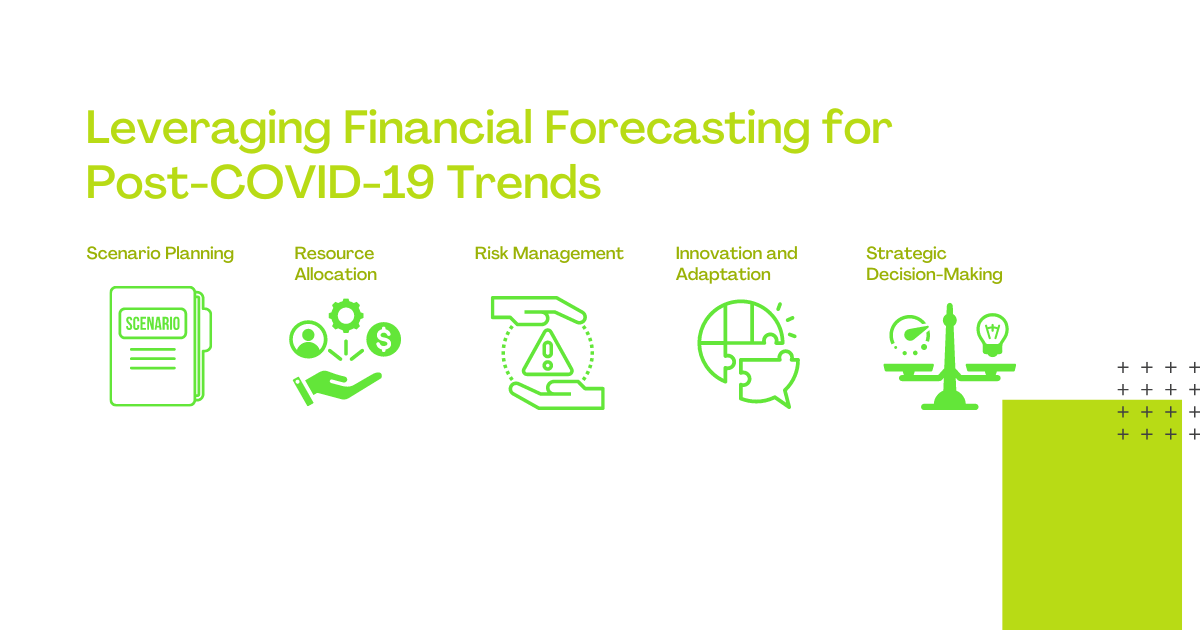
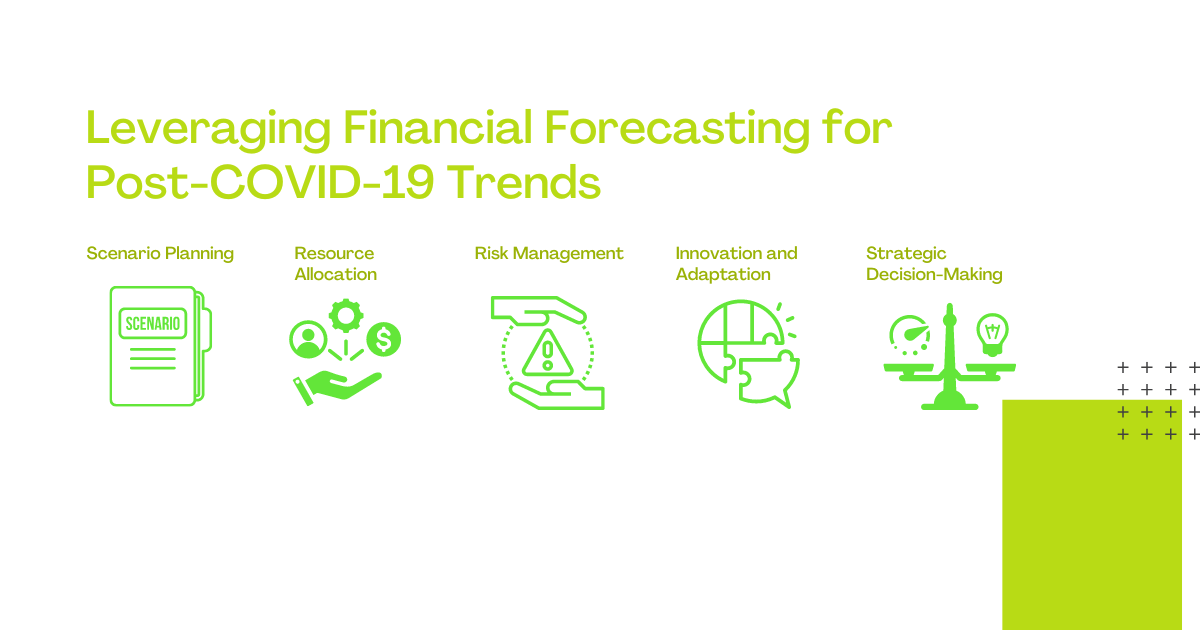
Leveraging Financial Forecasting for Post-COVID-19 Trends
Financial forecasting plays a pivotal role in helping businesses and individuals adapt to these emerging trends.
Scenario Planning
Use financial forecasting to create various scenarios that account for different economic trajectories. This enables you to prepare for multiple outcomes and make agile decisions.
Resource Allocation
Forecasting provides insights into cash flow, allowing businesses to allocate resources effectively and prioritise strategic investments.
Risk Management
Identify potential risks and uncertainties associated with post-pandemic economic trends. Develop strategies to mitigate these risks and ensure business continuity.
Innovation and Adaptation
Leverage forecasting to identify trends that present opportunities for innovation. Businesses that adapt to changing consumer needs and market demands will thrive.
Strategic Decision-Making
Informed by financial forecasts, individuals and businesses can make strategic decisions regarding expansion, diversification and resource allocation.
The post-COVID-19 economic landscape is a dynamic canvas where adaptability and foresight are paramount. Financial forecasting serves as a compass, guiding businesses and individuals through the challenges and opportunities that lie ahead. As you navigate the evolving trends, harness the power of financial forecasting and learn how a Financial Life Design™ can help you to make informed decisions that foster resilience, drive growth, and position you for success in the new economic era.
Related Posts

Nurturing Tomorrow’s Minds: How to Plan for Your Children’s Education – A Guide for Expat Families
As parents, providing a sound education is one of the most valuable gifts we can give our children.

Safeguarding Your Wealth: The Essence of Asset Protection
Asset protection is a cornerstone of financial security and peace of mind. It involves identi

Business Travel: Company Insurance, MNCs, SMEs and Global Destinations
In the dynamic landscape of modern business, the world becomes a canvas upon which opportunities are