



Evaluating Your Risk Profile for Health Insurance Coverage
Home » Blog » Personal Finance » Evaluating Your Risk Profile for Health Insurance Coverage
In an unpredictable world, managing risks is a crucial aspect of responsible financial planning. One of the most essential forms of risk management is health insurance coverage, which provides a safety net against unexpected medical expenses and ensures access to quality healthcare. To make informed decisions about your health insurance needs, it’s important to evaluate your risk profile. By asking the right questions and understanding your unique circumstances, you can tailor your health insurance coverage to align with your risk tolerance and financial goals.

Understanding Your Risk Profile
Your risk profile is a reflection of your individual circumstances, preferences and priorities. When it comes to health insurance, evaluating your risk profile involves assessing your health status, lifestyle, family dynamics and financial capacity.
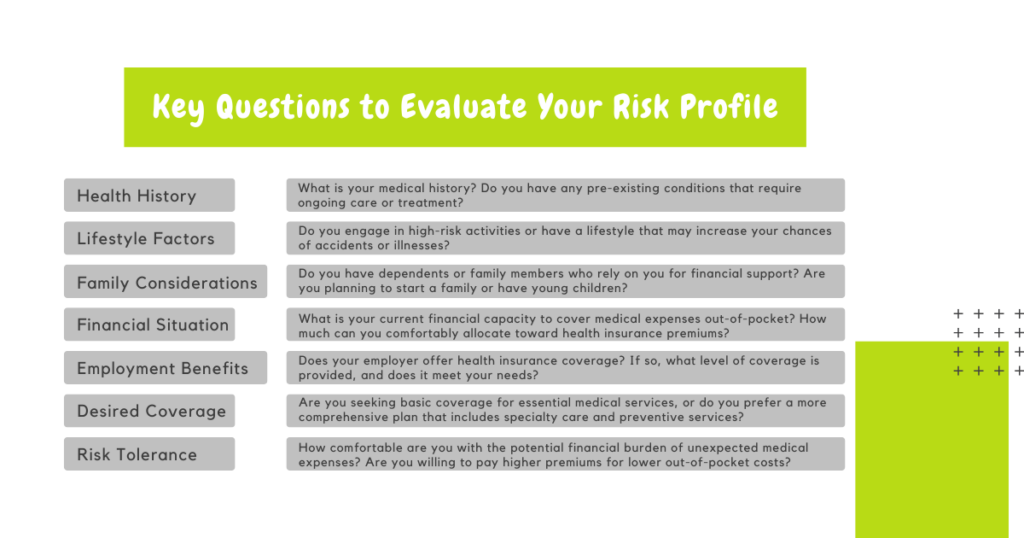
Key Questions to Evaluate Your Risk Profile
- Health History: What is your medical history? Do you have any pre-existing conditions that require ongoing care or treatment?
- Lifestyle Factors: Do you engage in high-risk activities or have a lifestyle that may increase your chances of accidents or illnesses?
- Family Considerations: Do you have dependents or family members who rely on you for financial support? Are you planning to start a family or have young children?
- Financial Situation: What is your current financial capacity to cover medical expenses out-of-pocket? How much can you comfortably allocate toward health insurance premiums?
- Employment Benefits: Does your employer offer health insurance coverage? If so, what level of coverage is provided, and does it meet your needs?
- Desired Coverage: Are you seeking basic coverage for essential medical services, or do you prefer a more comprehensive plan that includes specialty care and preventive services?
- Risk Tolerance: How comfortable are you with the potential financial burden of unexpected medical expenses? Are you willing to pay higher premiums for lower out-of-pocket costs?
Tailoring Your Health Insurance Coverage
Once you have a clear understanding of your risk profile, you can begin tailoring your health insurance coverage to align with your needs and preferences.

- Coverage Options: Research and compare different health insurance plans, considering factors such as coverage limits, deductibles, co-payments, and network of healthcare providers.
- Cost-Benefit Analysis: Evaluate the cost of premiums against potential out-of-pocket expenses. Consider scenarios where you may need medical care and assess the financial impact under different coverage options.
- Additional Benefits: Explore plans that offer additional benefits, such as coverage for prescription medications, specialist consultations and preventive screenings.
- Flexibility: Consider plans that allow you to adjust your coverage as your circumstances change. Some plans offer the option to add dependents or upgrade coverage levels.
Evaluating your risk profile for health insurance coverage is a critical step in managing the uncertainties of life. By asking thoughtful questions and understanding your unique needs, you can make informed decisions that provide peace of mind and financial security. Remember that health insurance is not just a financial tool; it’s a proactive measure that empowers you to access quality healthcare without the fear of overwhelming medical bills.

As you navigate the complex landscape of health insurance options, your risk profile will serve as your compass, guiding you toward the coverage that best aligns with your individual circumstances and goals. Let Financial Life Design help you go through the details.
Related Posts

Nurturing Tomorrow’s Minds: How to Plan for Your Children’s Education – A Guide for Expat Families
As parents, providing a sound education is one of the most valuable gifts we can give our children.

Safeguarding Your Wealth: The Essence of Asset Protection
Asset protection is a cornerstone of financial security and peace of mind. It involves identi

Business Travel: Company Insurance, MNCs, SMEs and Global Destinations
In the dynamic landscape of modern business, the world becomes a canvas upon which opportunities are