



Navigating the Tax Maze: A Guide to Effective Tax Planning
Home » Blog » Personal Finance » Navigating the Tax Maze: A Guide to Effective Tax Planning

Tax planning is a strategic approach to managing your finances, maximising savings and ensuring compliance with tax laws. In a complex and ever-changing tax landscape, understanding the nuances of tax laws, deductions, credits and effective strategies can lead to significant financial benefits. In this guide, we’ll explore the essentials of tax planning, including the importance of understanding tax laws, leveraging deductions and credits, and making the most of charitable giving.
While Singaporeans are still struggling to adapt to the rising prices of services, food, retail and other goods, another wave hits – headline inflation is projected to be coming in at between 5.5% and 6.5%, which means that inflation may still be on the rise.
The Foundation: Understanding Tax Laws, Deductions and Credit
A solid grasp of tax laws is essential for effective tax planning. Deductions and credits are two key avenues to reduce your taxable income and ultimately lower your tax liability.

Deductions: Deductions are expenses that you can subtract from your total income, reducing the portion of income subject to taxation. Common deductions include mortgage interest, medical expenses and certain business-related costs.
Credits: Tax credits directly reduce the amount of taxes you owe. They are especially powerful because they provide a dollar-for-dollar reduction in your tax liability. Examples include the Child Tax Credit, Earned Income Tax Credit and Education-related credits.
Charitable Giving: Doing Good and Saving on Taxes
Charitable giving not only benefits the causes you care about but also offers potential tax advantages. Contributions to qualified charitable organisations are deductible, allowing you to lower your taxable income. However, it’s important to keep thorough records of your charitable donations and ensure you’re contributing to recognized tax-exempt organisations.

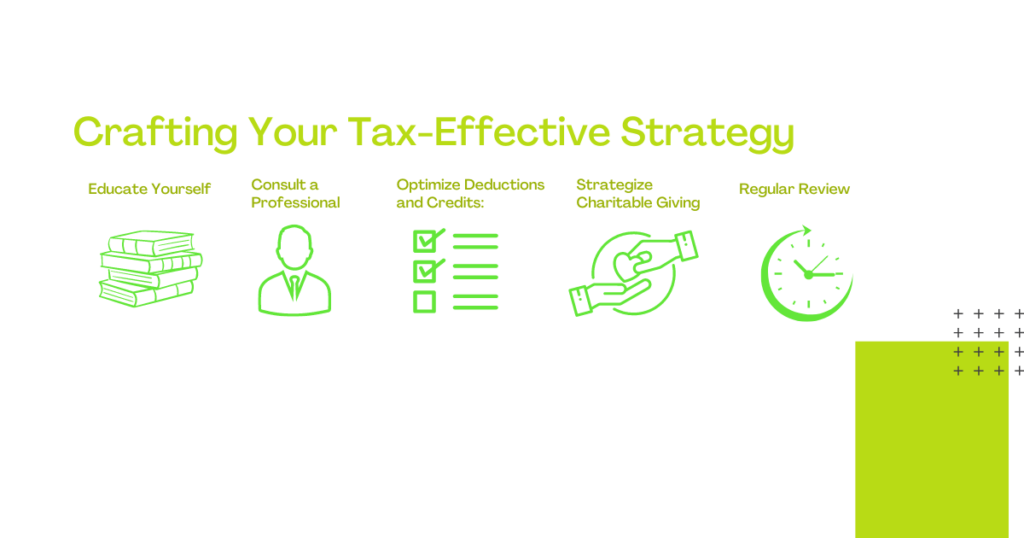
Crafting Your Tax-Effective Strategy
- Educate Yourself: Stay informed about changes in tax laws, deductions and credits to make informed decisions.
- Consult a Professional: Enlist the guidance of a tax professional who can help you navigate the intricacies of tax planning.
- Optimise Deductions and Credits: Identify eligible deductions and credits to maximise your tax savings.
- Strategise Charitable Giving: Consider making charitable contributions that align with your values and offer tax benefits.
- Regular Review: Continuously monitor your financial situation and tax implications, making adjustments as needed.
Tax planning is a dynamic process that requires attention, knowledge and strategic decision-making. By understanding tax laws, leveraging deductions and credits, and making informed charitable giving choices, you can optimise your tax situation.
A Financial Life Design™ can help you get started as you navigate the intricacies of the tax landscape, you’ll find that a proactive approach to tax planning can be a powerful tool on your journey toward financial well-being.
Related Posts

Nurturing Tomorrow’s Minds: How to Plan for Your Children’s Education – A Guide for Expat Families
As parents, providing a sound education is one of the most valuable gifts we can give our children.

Safeguarding Your Wealth: The Essence of Asset Protection
Asset protection is a cornerstone of financial security and peace of mind. It involves identi

Business Travel: Company Insurance, MNCs, SMEs and Global Destinations
In the dynamic landscape of modern business, the world becomes a canvas upon which opportunities are