



The Dilemma of Buying vs Renting a Car in Singapore
Home » Blog » General Finance » The Dilemma of Buying vs Renting a Car in Singapore
In the world of wheels, the decision between buying and renting a car is a pivotal one. As you navigate through the lanes of personal finance in Singapore, the choice you make can significantly impact your budget, lifestyle, and long-term financial goals. In this article, we’ll explore the age-old debate of buying vs renting a car, helping you steer toward a decision that aligns with your needs and aspirations.
The Allure of Buying
The goal of good cash flow management is to ensure that more money comes into your business than it goes out, thus maintaining a healthy financial foundation. To achieve this, it is essential to identify and predict periods of surplus and shortfall.
Identifying Periods of Surplus and Shortfall

Ownership Pride:
Buying a car in Singapore offers the satisfaction of ownership. You can customise it, make modifications, and enjoy the long-term companionship of your chosen vehicle.
Freedom to Drive:
With no mileage or time restrictions, you’re free to drive as much as you want without worrying about usage-based fees. This can be particularly advantageous if you have a busy schedule or enjoy road trips.
Equity Accumulation:
As you make payments on an auto loan in Singapore, you build equity in the car, which can be beneficial if you decide to sell it later or trade it in for a new one.
The Appeal of Renting

Flexibility:
Renting a car in Singapore offers flexibility, allowing you to switch to different models as your needs change. This is especially useful if you anticipate changing transportation requirements due to changes in your lifestyle or work.
Lower Upfront Costs:
Renting often requires a smaller down payment and lower monthly payments compared to buying in Singapore, where car prices can be high due to various taxes and import duties.
Minimal Maintenance Worries:
Most leased cars in Singapore are covered under the manufacturer’s warranty, reducing maintenance and repair costs in a city known for its strict vehicle maintenance regulations.
Keeping Up with Trends:
Renting lets you experience the latest vehicle models and technologies without committing to long-term ownership, which can be appealing if you’re tech-savvy and want to stay on the cutting edge of automotive innovations.
The Road to Decision
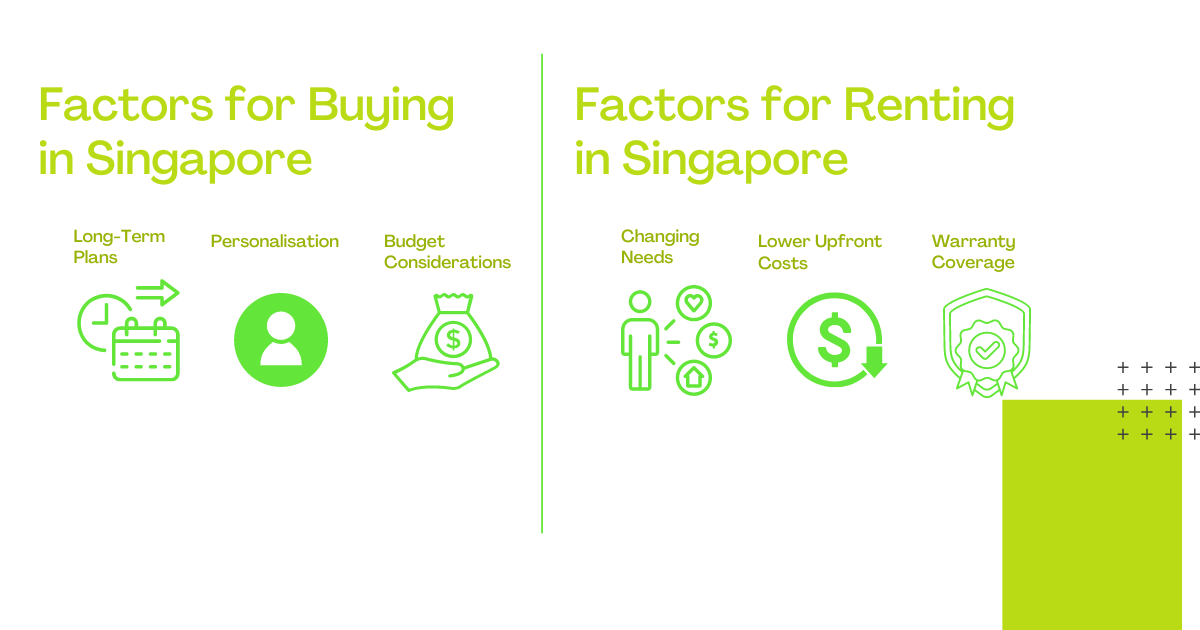
Factors for Buying in Singapore Long-Term Plans: If you envision driving the same car for several years and value the benefits of long-term ownership, buying may offer more financial benefits in the long run.
Personalisation: If personalising your car and making modifications is important to you, owning is the way to go. However, be mindful of regulations regarding car modifications in Singapore.
Budget Considerations: While monthly payments may be higher when buying in Singapore, owning your car outright can lead to lower expenses once the loan is paid off, considering you’ve factored in ongoing costs like road tax and insurance.
Factors for Renting in Singapore Changing Needs: If your lifestyle or transportation needs change frequently, renting provides the flexibility to adapt quickly, which can be especially valuable in Singapore’s dynamic urban environment.
Lower Upfront Costs: If you’re looking to drive a new car with lower initial costs, leasing might be more attractive in Singapore, where buying a car often involves significant upfront expenses.
Warranty Coverage: If you want to avoid unexpected maintenance costs and take advantage of the stringent vehicle warranty laws in Singapore, leasing a car under warranty could be advantageous.
Making the Turn: Assessing Your Situation in Singapore
Financial Situation:
Evaluate your financial stability and ability to make monthly payments. In Singapore, where car ownership comes with various costs like the Certificate of Entitlement (COE) and Additional Registration Fee (ARF), assess whether you can comfortably afford the payments and associated expenses.
Usage Patterns:
Consider how often you drive and the distances you cover. If you have a long daily commute or frequently travel with children, owning a car might make more sense. However, also weigh the convenience of public transportation and ride-sharing options.
Lifestyle Changes:
Think about any potential lifestyle changes that could impact your transportation needs, such as a growing family or moving house.
Desired Features:
If you’re attracted to having the latest features and technology in your car, leasing could offer the opportunity to drive new models more frequently, keeping you up-to-date with the rapidly evolving automotive scene.
The decision to buy or rent a car in Singapore is a significant one, intertwined with your financial goals, lifestyle preferences, and long-term plans in this unique city-state. Buying provides the pride of ownership, while renting offers flexibility and lower upfront costs. Before you rev up your engine, carefully assess your financial situation, usage patterns, and future plans, considering Singapore’s specific regulations and costs associated with car ownership.
Whichever route you choose, remember that it’s not just about the vehicle itself—it is about aligning your transportation choice with the broader journey of your financial well-being in the context of Singapore. As you navigate through the roads of expense planning, Financial Life Design can help you with a smooth ride toward your goals.
Related Posts

Nurturing Tomorrow’s Minds: How to Plan for Your Children’s Education – A Guide for Expat Families
As parents, providing a sound education is one of the most valuable gifts we can give our children.

Safeguarding Your Wealth: The Essence of Asset Protection
Asset protection is a cornerstone of financial security and peace of mind. It involves identi
Business Travel: Company Insurance, MNCs, SMEs and Global Destinations
In the dynamic landscape of modern business, the world becomes a canvas upon which opportunities are